
Learning how to build a sales funnel for affiliate marketing is not about hiding an affiliate link behind extra pages. A useful funnel helps a specific audience understand a problem, evaluate options, receive practical guidance, and make an informed decision—with the affiliate relationship disclosed clearly.
Choose one audience, problem and offer
A broad funnel such as “best business software” produces weak intent. A focused funnel answers a concrete question:
- Audience: local HVAC owner.
- Problem: missed calls are becoming lost estimates.
- Education: how missed-call text-back works and what it requires.
- Offer: a platform that can automate the response and follow-up.
Before promoting an offer, review its terms, allowed traffic sources, brand-bidding rules, commission conditions, refund rules, claim restrictions, cookie/attribution details and disclosure requirements.
The seven-page affiliate funnel
1. Content/traffic page
Answer a long-tail problem through SEO, video, social, community, ads where allowed, or partnerships.
2. Opt-in page
Offer a specific checklist, template, calculator, mini-course or implementation guide.
3. Thank-you page
Deliver the resource, set expectations and present the most relevant next action.
4. Bridge page
Explain who the solution is for, how it works, alternatives, limitations and disclosure.
5. Offer/vendor page
The visitor reaches the merchant through a clearly labeled affiliate link.
6. Email sequence
Deliver value, answer objections, show setup, and repeat the disclosure near recommendations.
7. Conversion feedback
Use permitted tracking, UTM data, funnel analytics and program reporting to improve content.
Visual tutorial: build the funnel in HighLevel
Step 1: Create the funnel
Go to Sites → Funnels → New Funnel. Choose From Blank, Funnel AI, or From Templates. For a first funnel, a clean template can speed up layout while you focus on message-market fit.
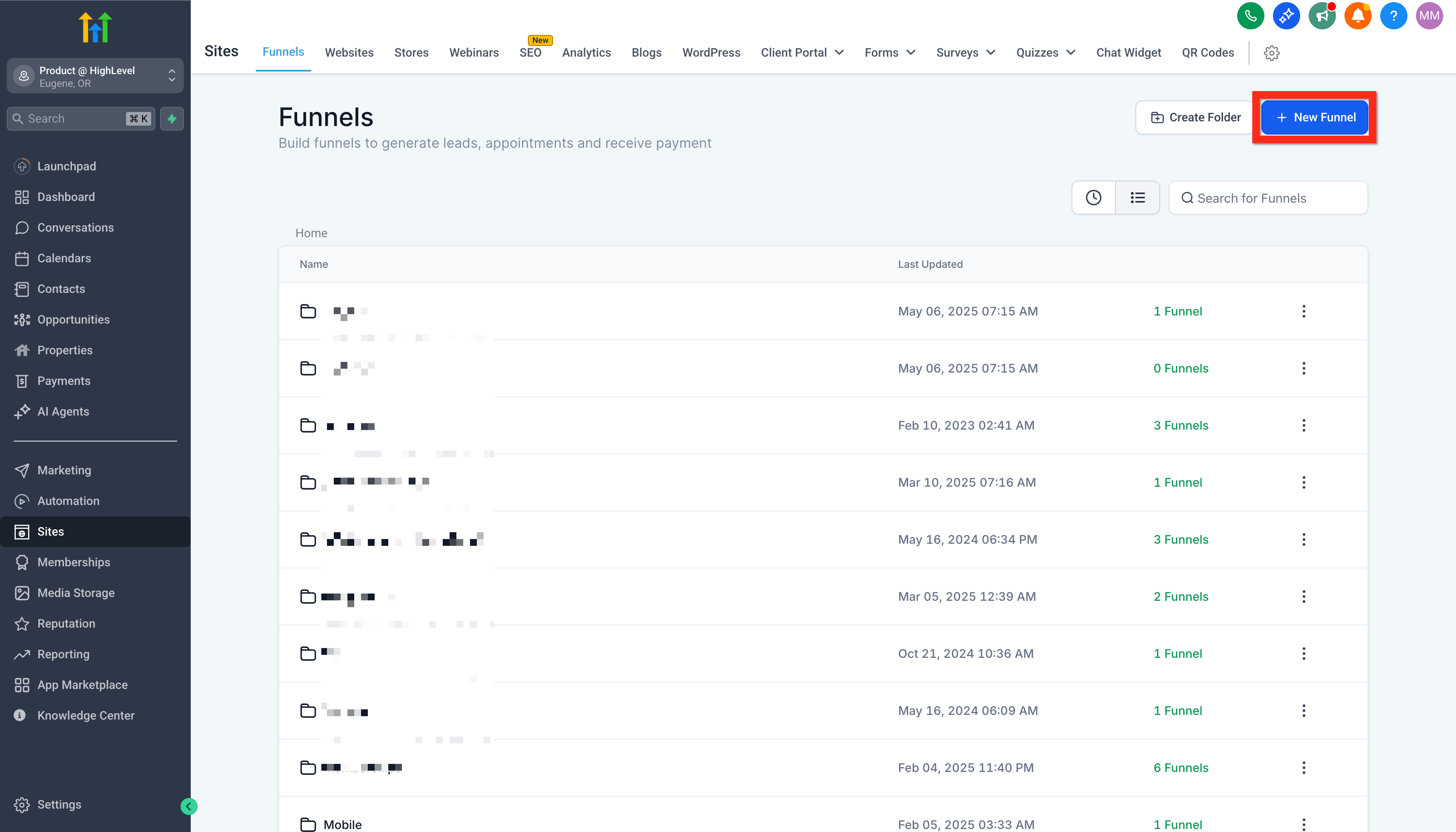
Step 2: Choose blank, AI or a template
Click New Funnel and select the starting method. Keep the structure small: opt-in, thank-you/bridge, and optional long-form comparison or tutorial. Every extra step must reduce uncertainty or deliver value.
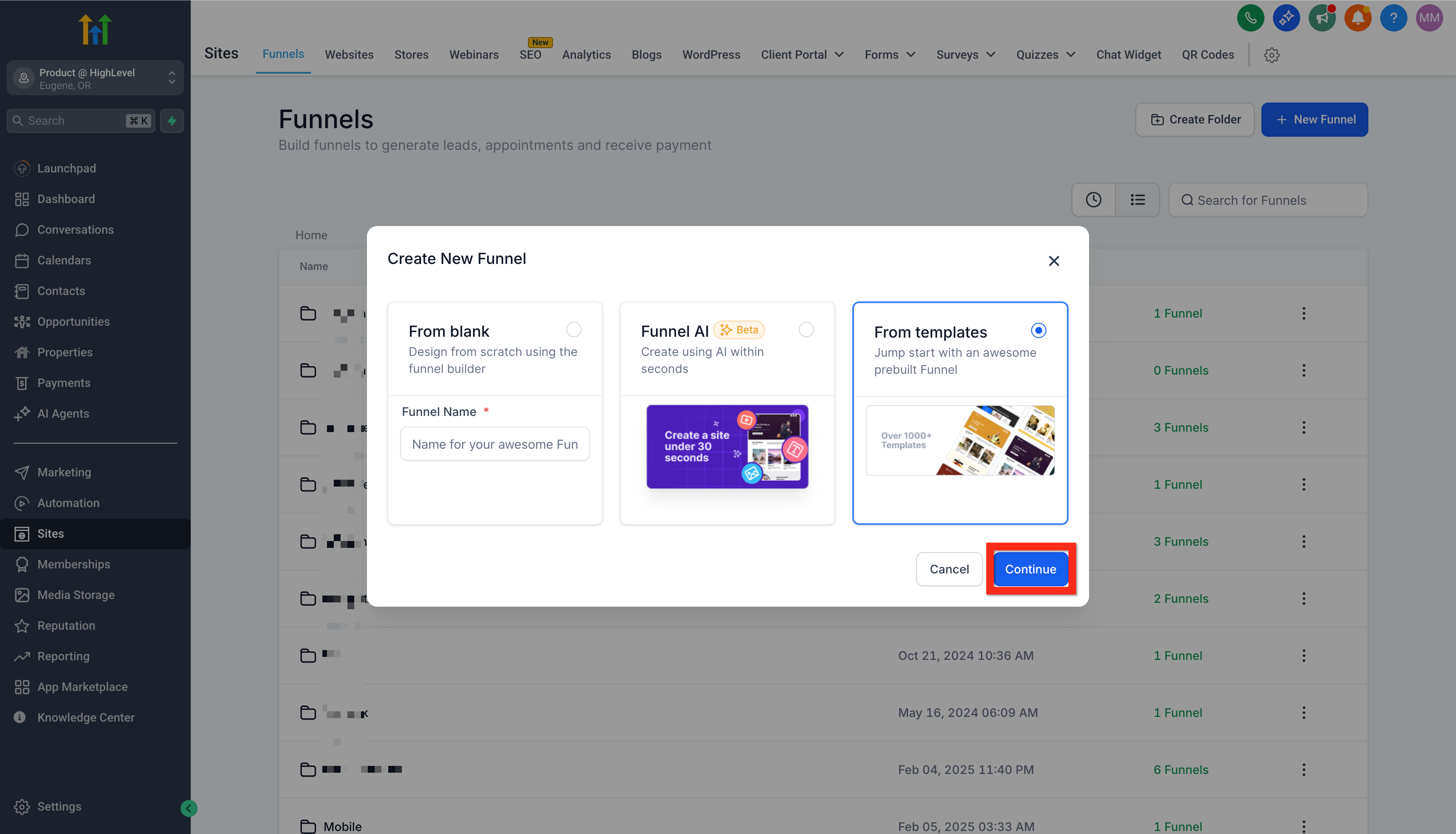
Step 3: Select and preview a template
Filter the library for lead-generation or simple opt-in designs. Preview desktop and mobile. Ignore decorative complexity; prioritize a clear promise, proof, disclosure, and form.
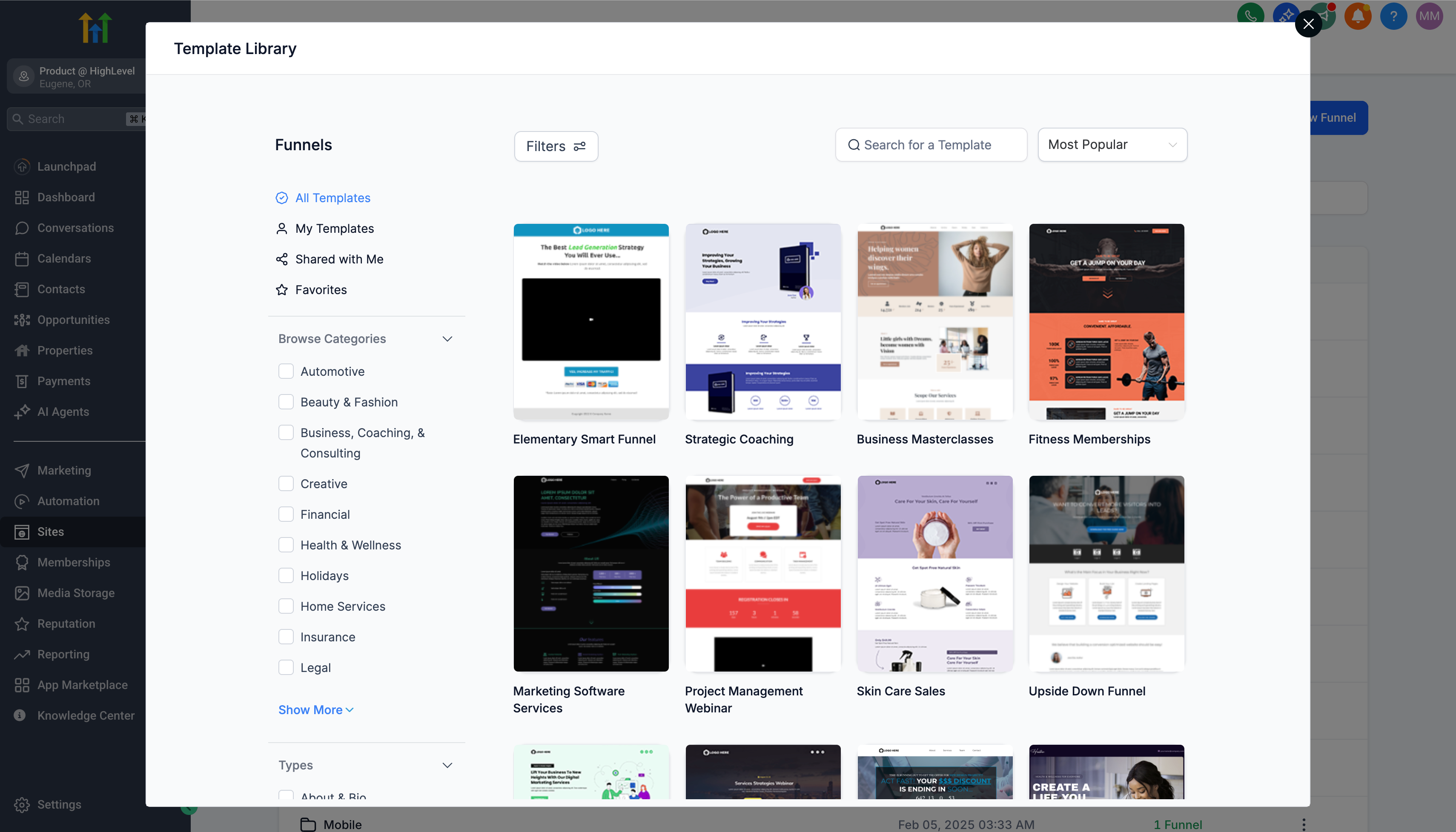
Step 4: Build the opt-in page
Use a headline that names the audience and outcome, three to five benefit bullets, a short form, privacy/consent language, and a button describing the action. Ask only for data you will use. Do not make access to a promised resource depend on buying through the affiliate link.
Step 5: Create and attach the form
Use the HighLevel Form Builder to create name/email fields, required consent where applicable, source fields, and a helpful thank-you action. Map fields to CRM properties and tag the contact by lead magnet/topic.
Step 6: Build the bridge page
Deliver the promised resource first. Then explain the problem, criteria, solution, who it fits, who should choose something else, current price verification link, and material limitations. Place the affiliate disclosure before or beside the first affiliate CTA.
Disclosure example: “If you buy through the links below, we may earn a commission at no extra cost to you. We recommend tools based on fit; verify current features and pricing on the vendor’s site.”
Step 7: Add the affiliate CTA safely
Use descriptive copy such as “See current HighLevel plans” or “Start the extended HighLevel trial.” Mark links rel="sponsored noopener". Do not disguise the destination, make unsubstantiated earnings claims, or imply that results are guaranteed.
Step 8: Build the email workflow
Trigger after the form submission. Send the promised resource immediately, then a short sequence: quick win, tutorial, common mistake, honest comparison, case/example with appropriate substantiation, and close-the-loop message. Stop or adapt after reply, booking, opt-out or stated disinterest.
Step 9: Connect a domain and test
Under Settings → Domains, connect a branded domain/subdomain, follow DNS instructions, verify records, and attach the funnel. Test forms, consent, mobile layout, emails, every CTA, disclosure placement, analytics and redirects.
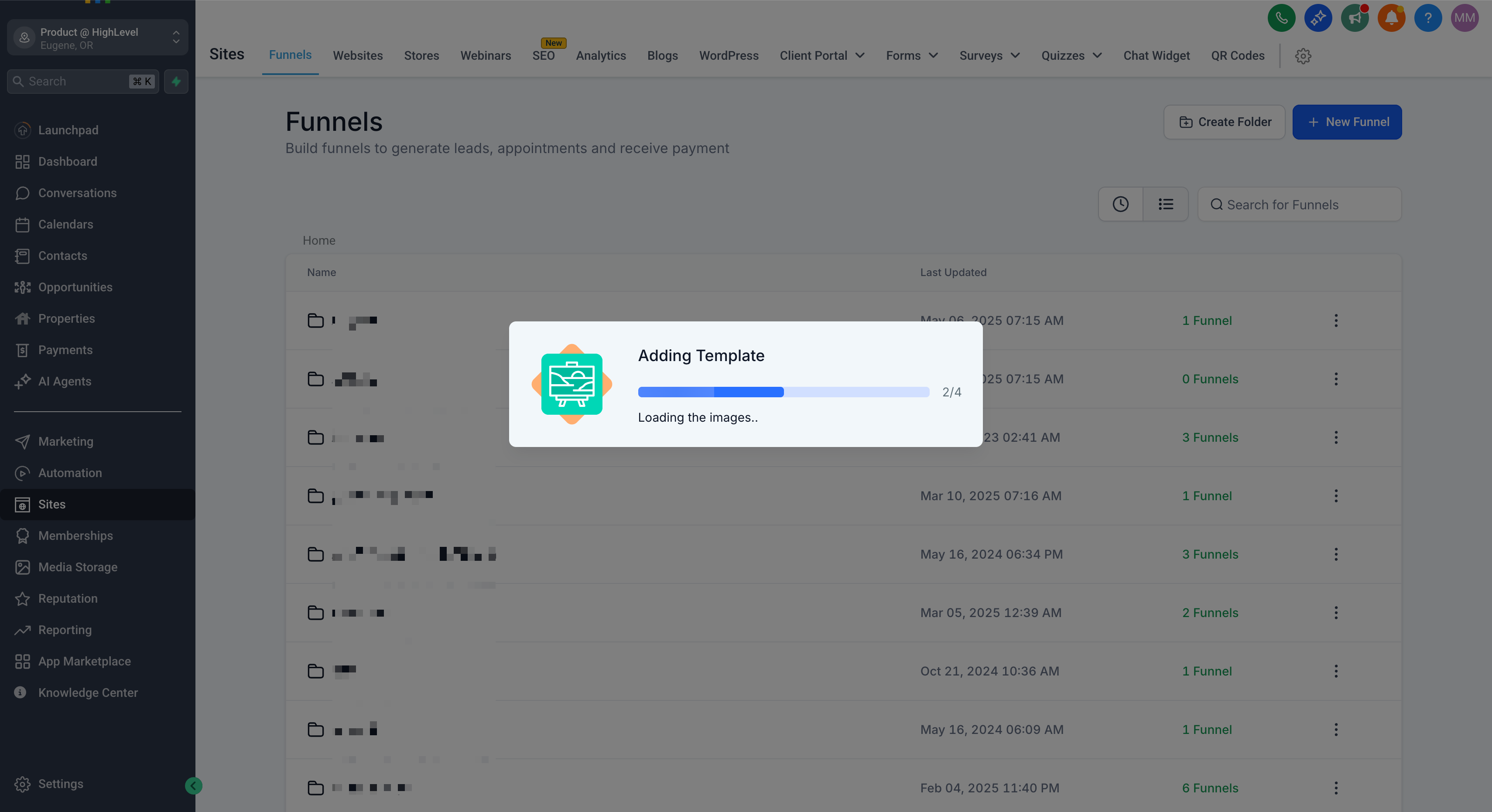
Step 10: Measure the entire path
Use HighLevel Site & Funnel Analytics plus program reporting. Track landing-page conversion, email delivery, click-through, bridge-to-offer click, merchant conversion where reported, refund/reversal rate, earnings per click, subscriber value, opt-outs and complaints. Respect privacy and the affiliate program’s tracking rules.
Build the funnel, CRM and follow-up together
HighLevel includes funnel/website building, forms, CRM, workflows, email/SMS, analytics, calendars and more.
Start Your 30-Day HighLevel Trial
Affiliate disclosure: we may earn a commission if you use this link, at no additional cost to you. Verify current trial terms, features, pricing and usage charges on the destination page.
A six-email affiliate sequence
| Purpose | Primary CTA | |
|---|---|---|
| 1. Delivery | Give the promised resource immediately | Use/download resource |
| 2. Quick win | Help implement one useful step | Complete the step |
| 3. Mistakes | Prevent common failure | Audit current setup |
| 4. Method | Show the full workflow/tutorial | Read/watch tutorial |
| 5. Evaluation | Compare options, fit and limitations | Review the solution |
| 6. Decision | Answer final questions and close loop | Choose, reply, or pause |
FTC disclosure principles for affiliate funnels
- Disclose a material connection clearly and conspicuously.
- Place disclosure near the endorsement or affiliate link, not only on an About page or footer.
- Use plain language people understand.
- Repeat disclosures where recommendations appear across pages, email, video, and social content.
- Do not make performance, income, savings, or typical-results claims without appropriate evidence and context.
- Follow the merchant’s affiliate agreement and the law applicable to your audience.
What to optimize first
- Traffic-message match: does the page answer the query/ad promise?
- Offer relevance: does the affiliate product genuinely solve the stated problem?
- Lead magnet usefulness: can the subscriber obtain a real win without buying?
- Page clarity: one audience, one promise, one primary action.
- Trust: transparent disclosure, evidence, limitations, author experience, and updated facts.
- Follow-up: delivery and education before repeated promotion.
- Economics: measure refunds/reversals and subscriber quality, not only clicks.
Common affiliate funnel mistakes
- Sending cold traffic directly to a generic vendor page.
- Promoting many unrelated offers in one funnel.
- Hiding the affiliate relationship.
- Claiming guaranteed income or results.
- Writing fake urgency or inventing bonuses.
- Capturing email without clear expectations or consent.
- Optimizing clicks while ignoring refunds, complaints and long-term trust.
- Failing to update screenshots, pricing and features.
Frequently asked questions
Do I need an email list for affiliate marketing?
No, but a permission-based list lets you deliver education and build a durable audience instead of relying on one click.
Should I use a bridge page?
Use one when it adds decision value: explanation, fit, comparison, tutorial, limitations and disclosure. Do not add it merely to create another click.
Where should the affiliate disclosure appear?
Clearly and conspicuously near the recommendation/link, before the reader acts. Repeat it in relevant emails, videos and social posts.
Can HighLevel track affiliate sales?
HighLevel can track funnel and campaign behavior; final sale/commission attribution also depends on the affiliate program’s permitted tracking and reporting.
Build an audience asset, not a link machine
The durable approach to how to build a sales funnel for affiliate marketing is to make every step useful even before a purchase. Solve a narrow problem, disclose the relationship, teach the evaluation criteria, recommend honestly, and improve the funnel using customer outcomes—not hype.
Create your affiliate funnel in HighLevel
Start with one audience, one lead magnet, one transparent recommendation and one measurable journey.
Start Your 30-Day HighLevel Trial
Affiliate disclosure: we may earn a commission if you use this link, at no additional cost to you.
Related Posts